


Ticks
Enjoy your yard. Not the risks that come with it.
Explore Our Services
Ticks are among the most dangerous parasites in North America, and their populations are expanding. The blacklegged tick (deer tick) is the primary vector for Lyme disease, which affects over 476,000 Americans annually — the most common vector-borne disease in the country. In addition to Lyme, ticks transmit Anaplasmosis, Babesiosis, Rocky Mountain Spotted Fever, and several other serious illnesses. A single undetected bite can have lasting health consequences.
Select Exterminating’s tick control program targets ticks where they live and wait for hosts — along wooded edges, in tall grass, and in leaf litter around your yard. Our barrier treatments dramatically reduce tick populations on your property, providing protection for your family and pets throughout the entire active season.
Understanding tick infestations
Ticks are small, easy to miss, and capable of transmitting serious disease with a single bite. Understanding the conditions and warning signs that indicate a tick problem on your property can protect your family before an exposure occurs:
Ticks found on people or pets after outdoor activity
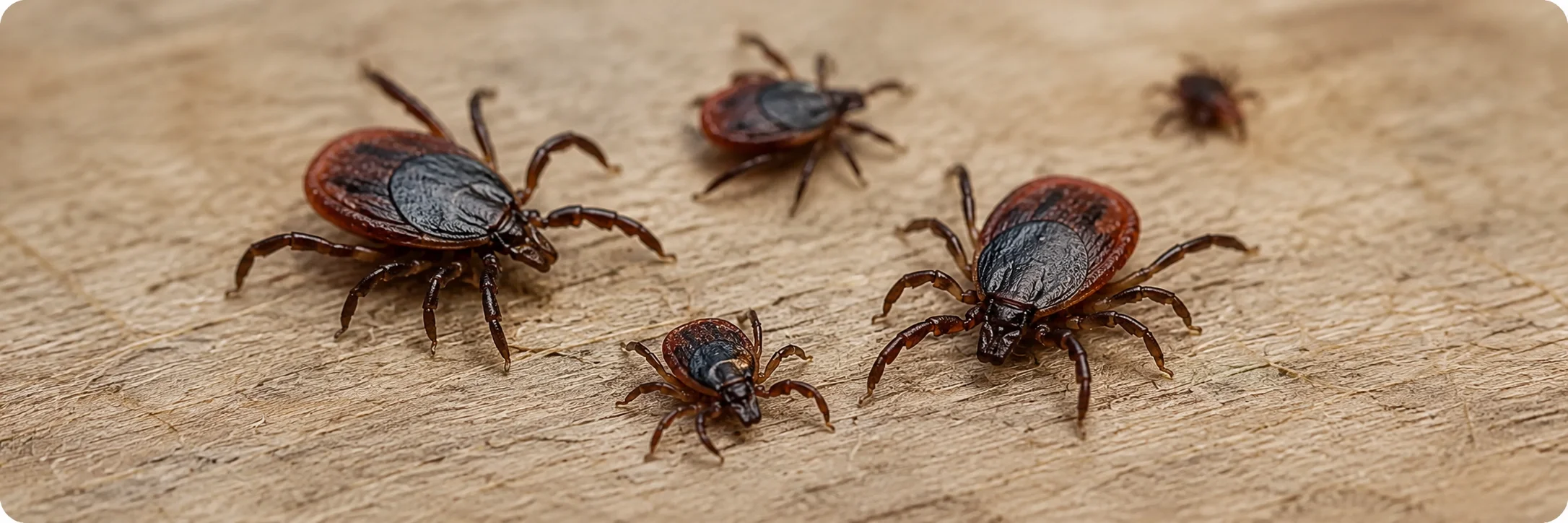
Finding ticks attached to your family members or pets after time spent in the yard or nearby wooded areas indicates an established tick population on or adjacent to your property. Deer ticks are extremely small — nymphs are the size of a poppy seed — and are easily missed during routine checks.
Wooded edges, tall grass, and leaf litter on your property
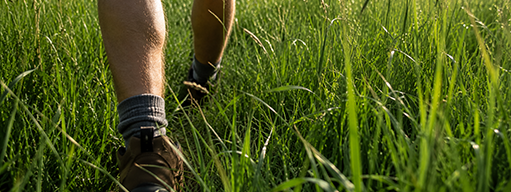
Ticks don't jump or fly — they wait in a behavior called "questing," perching on tall grass and brush with their front legs extended to grab onto passing hosts. Properties with wooded borders, dense ground cover, and unmaintained edges are high-risk tick habitats.
Our tick treatment process
Our tick control program is built around targeted, seasonally timed treatments that hit tick populations at their most active and vulnerable stages. Here’s how we protect your property:

Detailed Inspection
Our technicians assess your property for tick habitats, including wooded edges, overgrown vegetation, leaf litter accumulation, and wildlife travel corridors. We identify the tick species present, as treatment timing and approach vary between deer ticks and dog ticks.

Treatment Plan
We apply targeted acaricide treatments to high-risk zones — wooded borders, ground cover plantings, and tall grass areas — where ticks congregate. Treatments are timed to coincide with nymph activity in spring and adult activity in fall for maximum effectiveness.

Follow-Up
Tick control requires seasonal management. We schedule recurring treatments throughout the active season and recommend habitat modifications — such as leaf removal, grass trimming, and woodpile management — to reduce tick-favorable conditions on an ongoing basis.

4.9/5
Over 4,700 Reviews
Why choose our tick treatment
Our tick treatment utilizes the latest advances in technology and eco-friendly methods. With years of experience and thousands of successful treatments, we deliver complete elimination every time.
Targeted acaricide treatments applied to high-risk tick harborage zones
Seasonal timing aligned with nymph and adult activity peaks
Habitat assessment and modification recommendations for long-term reduction
Frequently asked questions
How do I know if a tick bite requires medical attention?
Any tick bite should be monitored closely. Remove the tick promptly using fine-tipped tweezers, pulling straight upward without twisting. Watch for a bulls-eye rash (erythema migrans), fever, chills, fatigue, or joint pain in the days and weeks following the bite. If any of these symptoms appear, contact your doctor immediately.
Can ticks live inside my home?
Most tick species cannot complete their life cycle indoors and do not infest homes the way fleas do. However, brown dog ticks are a significant exception — they can breed and establish populations entirely indoors. Any tick brought inside on a pet or clothing should be removed and disposed of immediately.
When are ticks most dangerous?
Deer tick nymphs are considered the highest-risk stage because of their tiny size, making them easy to miss during body checks, and because they are actively feeding during the peak outdoor months of May through July. Adult ticks are most active in fall and during warm spells in late winter and early spring.
Does treating my yard really reduce tick populations?
Yes, significantly. Studies have shown that targeted acaricide treatments applied to the wooded edges and transitional zones of residential properties can reduce tick populations by 68–100% in treated areas. Combined with habitat modifications, professional yard treatment is the most effective defense against tick exposure.
Are your tick treatments safe for my pets?
Yes. Our treatments are applied to vegetation and ground cover — not directly to your pets. We advise keeping pets and children off treated areas until the product has dried, typically within 30 to 60 minutes. We also strongly recommend maintaining year-round tick prevention medication on all pets as a complementary measure.