



Bees & Wasps
Don’t let stingers run your summer.
Explore Our Services
Bees and wasps are more than a startling surprise — for the 5–7% of the population with venom allergies, a single sting can be life-threatening. Even for those without allergies, aggressive species like yellow jackets and bald-faced hornets will defend their nests with swarming attacks that can result in dozens of stings. When a colony establishes itself on or near your home, professional removal is the only safe solution.
Select Exterminating’s technicians are trained to identify the species, locate the nest — whether it’s in a wall void, underground, or hanging from an eave — and execute safe, effective removal. We approach every job with proper protective equipment and species-appropriate methods, minimizing risk to your family while eliminating the threat completely.
Understanding Bee and Wasp Infestations
Not all stinging insects behave the same way — and knowing what you’re dealing with is critical before taking any action. Here are the most common signs that bees or wasps have established a colony on or near your property:
High traffic of flying insects near a single point
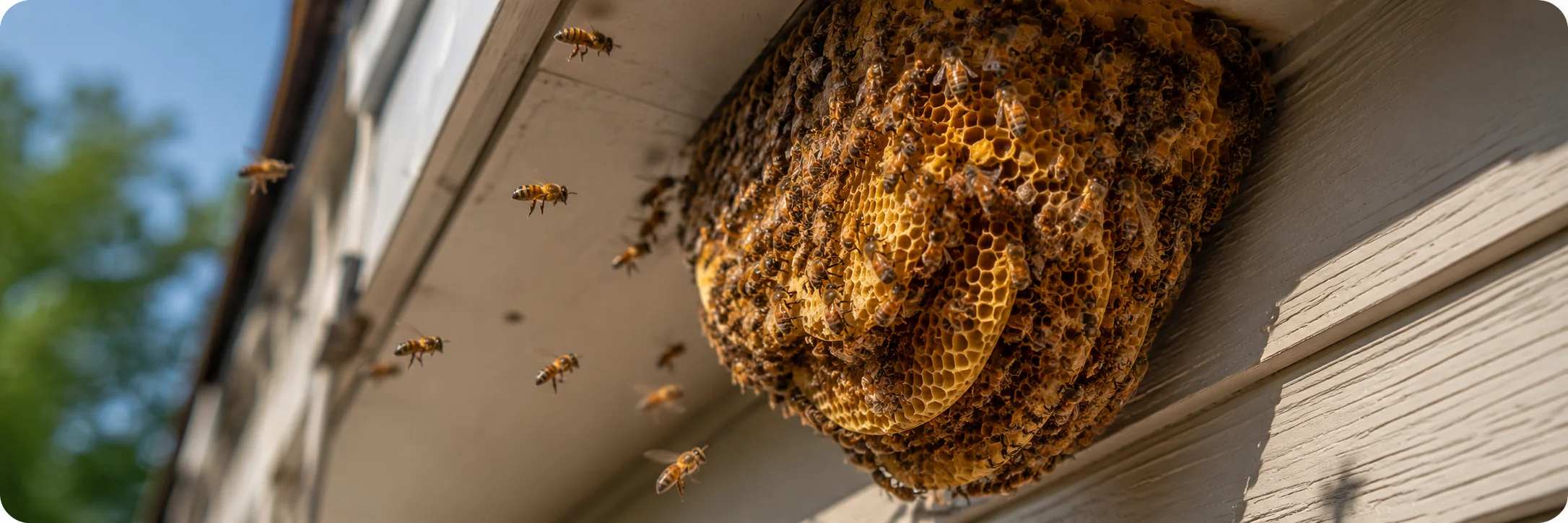
A steady stream of bees or wasps entering and exiting a specific gap in your siding, eave, soffit, or ground opening indicates an established nest. Yellow jackets frequently build underground colonies that can contain thousands of individuals by late summer.
Visible nest structures on or inside your home
Papery nests attached to overhangs, under decks, or inside attic spaces are typical of wasps and hornets. Honeybees may establish hives inside wall voids, which can cause structural damage and attract other pests if not properly removed.
Our Bee and Wasp Treatment Process
Every stinging insect situation is different — species, nest location, and colony size all determine the safest and most effective course of action. Here’s how we handle it:

Detailed Inspection
Our technicians locate and identify the nest, assess the species and colony size, and evaluate any structural access points. Proper species identification determines whether removal, treatment, or relocation is the appropriate approach.

Treatment Plan
For wasps and hornets, we apply targeted insecticide directly to the nest and seal entry points after colony elimination. For honeybees inside wall voids, we coordinate live removal when appropriate, or treat and extract comb to prevent secondary pest problems.

Follow-Up
After nest removal or treatment, we inspect the area to confirm full elimination and seal structural entry points to prevent future nesting. We also advise on landscaping and property conditions that attract stinging insects.

4.9/5
Over 4,700 Reviews
Why Choose Our Bee and Wasp Control
Safe, species-appropriate removal methods for all stinging insects
Structural nest extraction to prevent honey and comb-related secondary damage
Full property assessment to identify and seal future nesting sites
Frequently asked questions
Can't I just knock the nest down myself?
This is strongly discouraged. Disturbing a nest — even a small one — can trigger an immediate, aggressive defensive swarm. Yellow jackets and bald-faced hornets are particularly dangerous when provoked. A single nest can contain thousands of individuals capable of stinging multiple times.
What's the difference between bees and wasps?
Bees are typically rounder, fuzzier, and less aggressive — they’re pollinators and will usually only sting when directly threatened. Wasps (including yellow jackets and hornets) are slender, shinier, and far more aggressive. They can sting repeatedly and will actively defend a large territory around their nest.
Is it possible to just relocate a honeybee hive instead of killing it?
Yes, and we make every effort to do so when live removal is feasible. Honeybees are important pollinators, and we work with local beekeepers when appropriate to safely relocate hives found in accessible locations. However, bees established inside wall voids often require treatment due to the structural complexities of live removal.
When is bee and wasp season?
Stinging insects become most active in late spring as queens begin building new colonies, with populations peaking in late summer and early fall. Yellow jacket colonies are largest and most aggressive from August through October. Nests typically die off in winter, but queens overwinter and restart the cycle in spring.
Will the nest come back after treatment?
The treated colony will not return, but new queens may establish nests in the same or nearby locations the following season. We seal entry points and advise on deterrent measures to reduce the likelihood of future nesting. Annual inspections in spring are a helpful preventive step.