



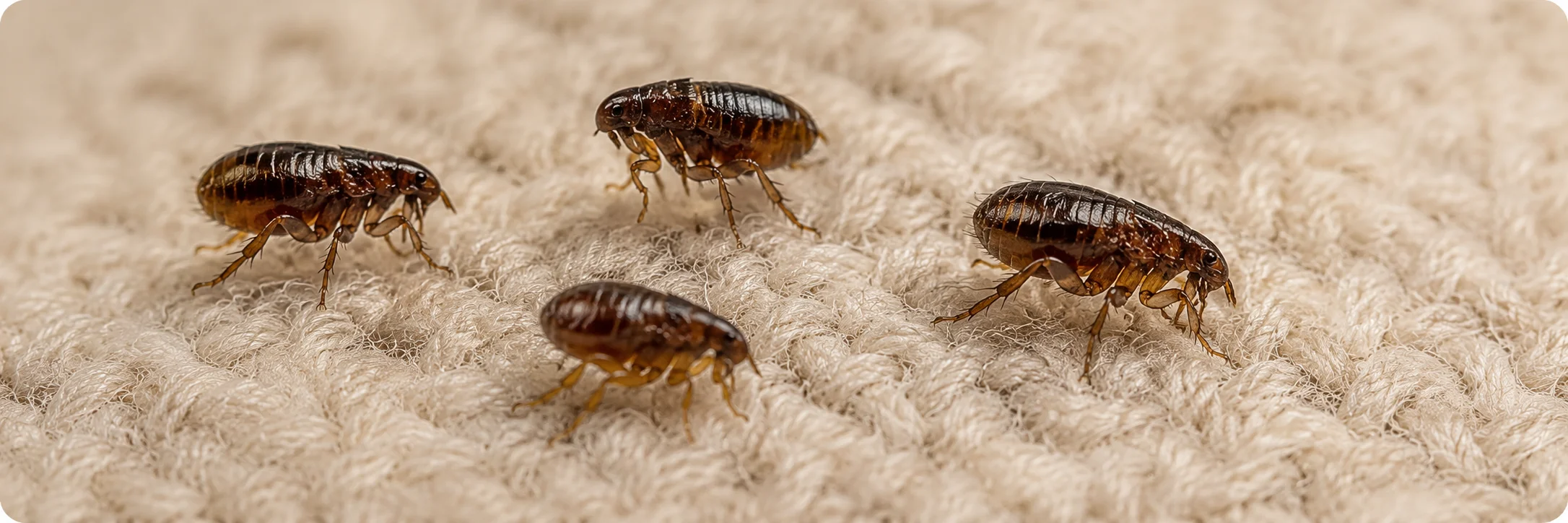
Fleas

Your pets deserve a pest-free home too.

Fleas are relentless parasites that reproduce at an extraordinary rate — a single female flea can lay up to 50 eggs per day, meaning a minor flea problem can explode into a full home infestation within a matter of weeks. While pets are the most common hosts, fleas will feed on humans when animal hosts are unavailable. Beyond the discomfort of their itching bites, fleas can transmit tapeworms and, historically, have been vectors for bubonic plague.

Effective flea control requires treating your pet, your home, and your yard simultaneously. Treating only one source leaves the others to reinfest immediately. Select Exterminating coordinates a comprehensive treatment program that breaks the flea life cycle at every stage — targeting adults, larvae, and eggs so the infestation doesn’t bounce back.

Understanding flea infestations

Fleas move fast, hide deep in carpets and upholstery, and reproduce before most homeowners realize there’s a problem. These are the most common signs that fleas have taken hold in your home:

Pets scratching excessively or showing hair loss

Constant scratching, chewing at the base of the tail, and patches of hair loss in pets are the most common early signs of a flea infestation. Inspect your pet's coat by parting the fur at the base of the tail and belly — flea dirt (tiny black specks of digested blood) confirms flea activity even when live fleas are hard to spot.

Bites around the ankles and lower legs

Fleas typically remain close to the ground, which is why humans experience bites most often around the ankles and lower legs. Small red, intensely itchy bite marks in clusters or a linear pattern — particularly in areas where pets rest — are characteristic of flea activity inside the home.

Our flea treatment process

Fleas have four life stages — and only treating adult fleas leaves eggs, larvae, and pupae behind to restart the infestation. Our program targets every stage simultaneously for complete, lasting control:

Detailed Inspection

Our technicians inspect indoor and outdoor areas where pets rest and travel to assess the extent of the infestation and identify all flea life stages present. High-density areas — pet bedding, rugs, furniture, and yard resting spots — receive the most attention.

Treatment Plan

We apply an adulticide to kill active adult fleas combined with an insect growth regulator (IGR) that prevents eggs and larvae from developing into reproductive adults. Exterior yard treatments target areas where wildlife and pets have introduced fleas to the property.

Follow-Up

A follow-up inspection is scheduled 2 to 3 weeks after initial treatment to assess any remaining activity. The flea pupal stage is resistant to insecticide, so some adult emergence after treatment is normal. A follow-up ensures the residual IGR is working and the life cycle has been fully broken.

4.9/5

Over 4,700 Reviews

Why choose our flea treatment

Our bed bug treatment utilizes the latest advances in heat technology and eco-friendly methods. With years of experience and thousands of successful treatments, we deliver complete elimination every time.

IGR technology that prevents flea eggs and larvae from reaching adulthood

Simultaneous indoor and outdoor treatment for comprehensive control

Follow-up protocol that accounts for the insecticide-resistant pupal stage

Frequently asked questions

Pet flea prevention products protect your pet but do not treat your home environment. Flea eggs, larvae, and pupae in your carpets, furniture, and yard can continue developing and infesting your pet even with prevention in place. Full environmental treatment is required to break the cycle.

This is normal and expected. Flea pupae (the cocoon stage) are protected by a physical shell that insecticides cannot penetrate. Adult fleas emerge from pupae in response to vibration, warmth, and CO2 — which is why you may see a surge of adults a few weeks after treatment. This is the life cycle running its course, and the IGR in our treatment ensures those adults cannot successfully reproduce.

Yes. Wildlife including squirrels, raccoons, opossums, and feral cats regularly introduce fleas to yard environments. When an infested animal rests under a deck, near a foundation, or in a garden bed, flea eggs drop into the soil and the infestation begins — no indoor pet required. New homeowners often discover fleas after moving into a previously pet-occupied home.

Wash all pet bedding in hot water. Vacuum all carpets, floors, and upholstered furniture thoroughly and immediately discard the vacuum bag or empty the canister outside. Pick up items from floors to give technicians full access. Arrange for your pets to receive veterinary flea treatment on or around the same day as the home treatment.

Yes, when applied by a licensed professional following EPA label guidelines. We ask that people and pets remain off treated surfaces until they have fully dried — typically 30 to 60 minutes. The IGR products we use are among the safest pest control compounds available and have an excellent safety profile for mammals.

We’re here to help.

Contact Form