


Pest Control for Logistics, Warehousing, and Distribution Centers
Protecting what moves through your facility protects what you deliver.
Explore Our Services
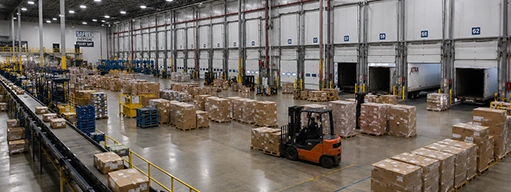
Logistics facilities, warehouses, and distribution centers are among the most challenging environments for pest management. The continuous movement of incoming and outgoing product, the complexity of large-footprint structures, the presence of loading docks open to the exterior for extended periods, and the storage of goods that attract rodents and insects all combine to create persistent pest pressure. For facilities serving food, pharmaceutical, or consumer goods clients, pest activity is not just an operational problem — it is a contractual and regulatory one.
Select Exterminating has extensive experience protecting logistics and distribution operations throughout the Northeast. We understand the operational rhythms of warehouse environments, the customer audit requirements that third-party logistics providers face, and the specific pest vulnerabilities created by dock management practices, racking systems, and high-volume product flow. Our programs keep your facility pest-free and your customer relationships protected.
Pest Risks in Logistics
The scale and operational nature of logistics facilities create pest vulnerabilities that are different in kind from most commercial environments. These are the two risk areas that drive the most significant pest activity in warehousing and distribution:
Rodents entering through loading docks and exterior gaps
Loading docks are the primary entry point for rodents in warehouse environments. Dock doors left open for extended periods, inadequate door seals, gaps around dock levelers, and poorly managed exterior environments adjacent to the building all create direct pathways for rodent entry. Once inside a large warehouse, rodents are difficult to locate and eliminate without a systematic monitoring program, and they can cause extensive damage to stored product and packaging before detection.
Stored product pests introduced through incoming shipments
Facilities receiving food products, agricultural commodities, or packaging materials are at ongoing risk of introducing stored product insects through infested shipments. Indian meal moths, various beetle species, and other stored product pests can establish populations in racking systems and product accumulation areas and spread to adjacent inventory. Third-party logistics providers are often held contractually responsible for pest-related product loss by their customers.
Our Approach for Logistics
Pest management in logistics environments requires a program scaled to large footprints, designed around dock activity, and built to satisfy the customer audit requirements that most 3PL and distribution operations face. Here is how we build our programs:

Facility Assessment
Our commercial specialists conduct a comprehensive assessment of your facility covering loading docks, receiving and staging areas, racking systems, product storage zones, employee areas, and exterior perimeter. We identify existing pest activity, entry points, and the operational practices that are creating ongoing vulnerability.

Scalable IPM Program
We deploy an IPM program matched to the scale and risk profile of your facility. Interior rodent monitoring stations are placed throughout the warehouse floor on a grid system that allows us to detect and localize activity quickly. Exterior bait stations form a perimeter barrier around the building perimeter with emphasis on dock areas. Stored product pest monitoring uses pheromone traps placed in high-risk product zones.

Audit-Ready Documentation and Reporting
We provide service reports after every visit, trend analysis on monitoring station activity, and a complete documentation package that satisfies customer audit requirements from food manufacturers, pharmaceutical companies, and retail clients. Our reporting can be formatted to align with specific customer requirements upon request.
4.9/5
Over 4,700 Reviews
Why Choose Select Exterminating
Grid-based interior monitoring programs designed for large-footprint warehouse environments
Dock-focused exterior management that addresses the primary rodent entry point in distribution facilities
Audit-ready documentation formatted to satisfy food, pharmaceutical, and retail customer requirements
Frequently asked questions
How do you manage pest control in a facility that operates 24 hours a day?
We develop service protocols that allow us to work in non-active zones while operations continue in other areas of the facility. Interior monitoring checks and trap servicing can typically be conducted during active operations with minimal disruption. For any chemical applications required, we coordinate with your operations team to identify appropriate timing and zone management.
Our customers require specific pest management certifications or standards. Can you meet them?
We work with logistics clients whose customers require compliance with specific pest management standards including AIB, SQF, BRC, and individual retailer or manufacturer requirements. We will review your customer requirements during our onboarding process and confirm that our program and documentation meet those standards before service begins.
How often should a warehouse or distribution center receive pest control service?
Service frequency depends on the size of the facility, the type of product stored, and the level of dock traffic. Most logistics facilities benefit from monthly service at a minimum, with bi-monthly service for facilities with active rodent pressure or food product storage. Your account manager will recommend a frequency based on your specific operation and risk profile.
Can you help us respond to a customer audit finding related to pest activity?
Yes. Responding to a customer audit finding requires documented corrective action and evidence of a systematic management program. We will work with your quality team to identify the root cause of the finding, implement targeted corrective treatments, and provide the documentation your customer needs to close the finding. We can also participate in follow-up customer visits upon request.
What is the best way to reduce pest pressure at our loading docks?
Dock management is the single most impactful factor in rodent control for warehouse facilities. Key measures include minimizing the time dock doors remain open, installing and maintaining dock door seals and brush strips, eliminating debris accumulation in dock areas, and ensuring exterior lighting does not attract insects that draw rodents near the building. Our facility assessment will identify the specific dock conditions at your facility and recommend targeted improvements.